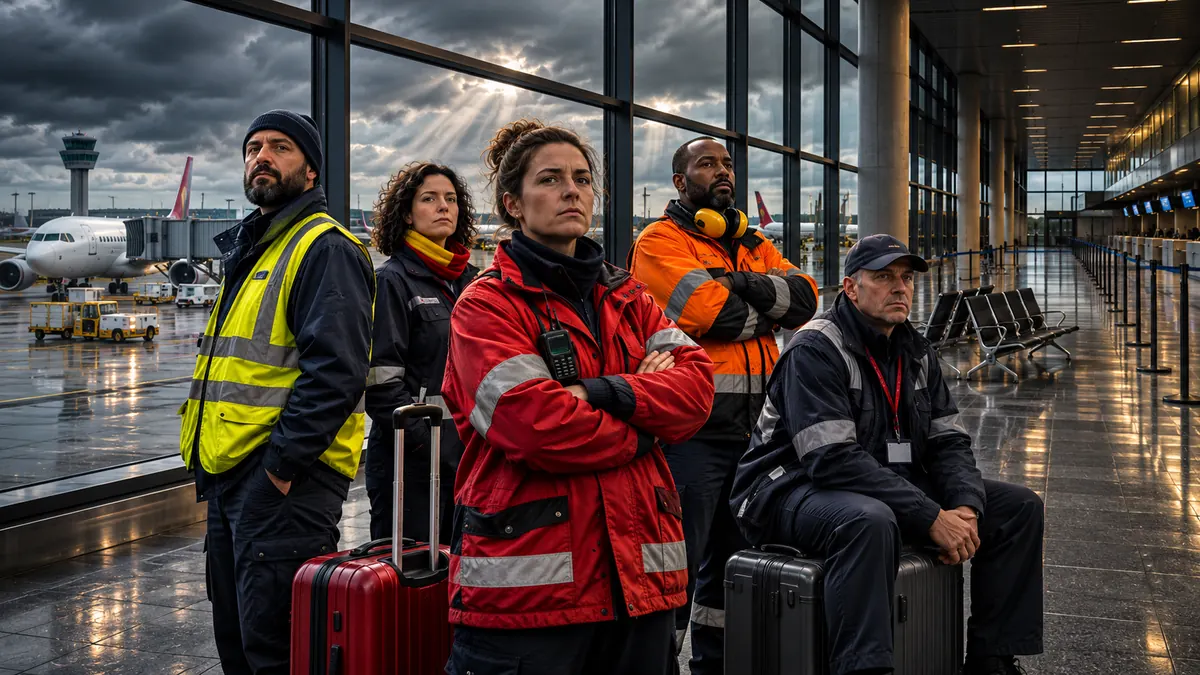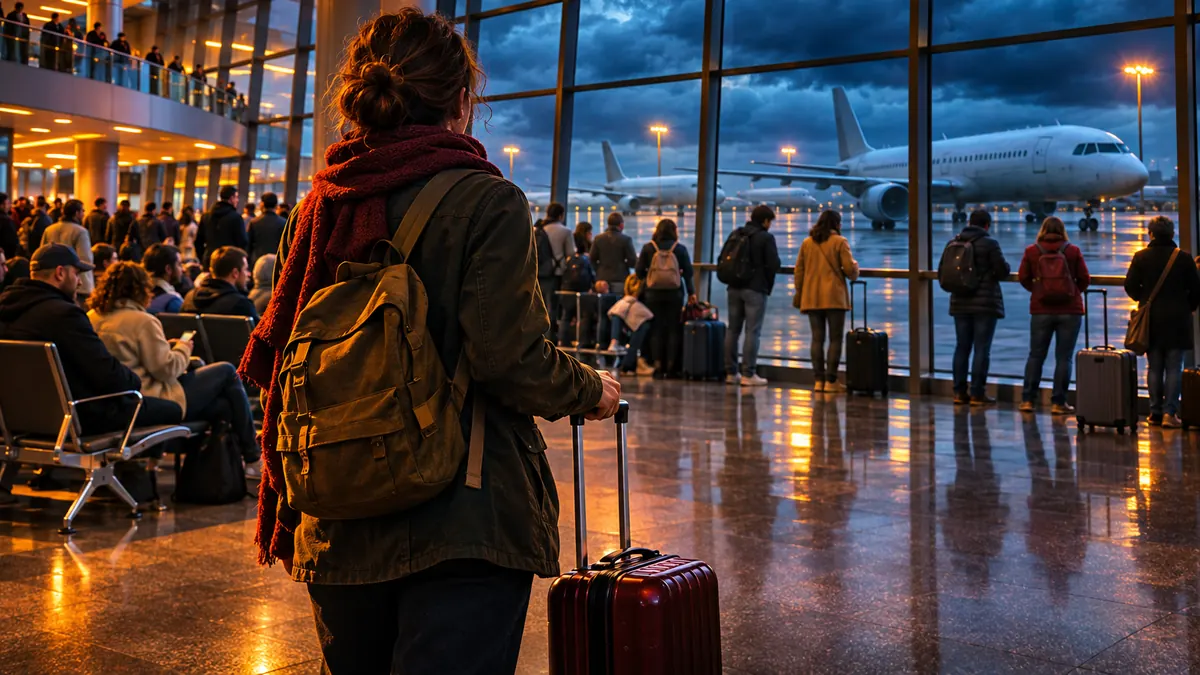
US airports continued to face widespread disruption on November 14, with more than 5,600 flights cancelled and roughly 7,000 delayed that day, according to G1’s Jornal Nacional report. Operations were beginning to recover at Ronald Reagan Washington National Airport, but larger airports were expected to take longer. The Federal Aviation Administration estimated a full recovery by the evening of November 15; some specialists warned that disruption could persist beyond that target.
The improving conditions followed a nationwide aviation stoppage on November 13, when more than 9,000 flights were cancelled, G1 reported. Reagan National alone recorded more than 200 cancellations on November 14, with dozens of flights still delayed. The Washington airport’s smaller size helped explain its earlier recovery, correspondent Raquel Krähenbühl reported, while the country’s major hubs continued to face a slower return to normal operations.
The disruption has renewed scrutiny of the infrastructure supporting US air traffic. G1 cited radar and communications failures at Newark and Denver in 2025, as well as broken fibre-optic cables in Texas that affected more than 2,000 flights that September. Aviation specialist Steven Arroyo told the broadcaster that renewal needed to cover cabling, control towers, controller recruitment and ageing computers and software.
For airlines and passengers, the immediate consequence remained thousands of cancelled or delayed journeys despite signs of improvement. University of Nevada professor and pilot Daniel Bubb also told G1 that outdated routes require longer flights, increasing travel time and fuel consumption. He argued that modernisation requires additional funding and congressional oversight. The immediate uncertainty was whether the FAA’s recovery timetable would hold, particularly at the largest airports.