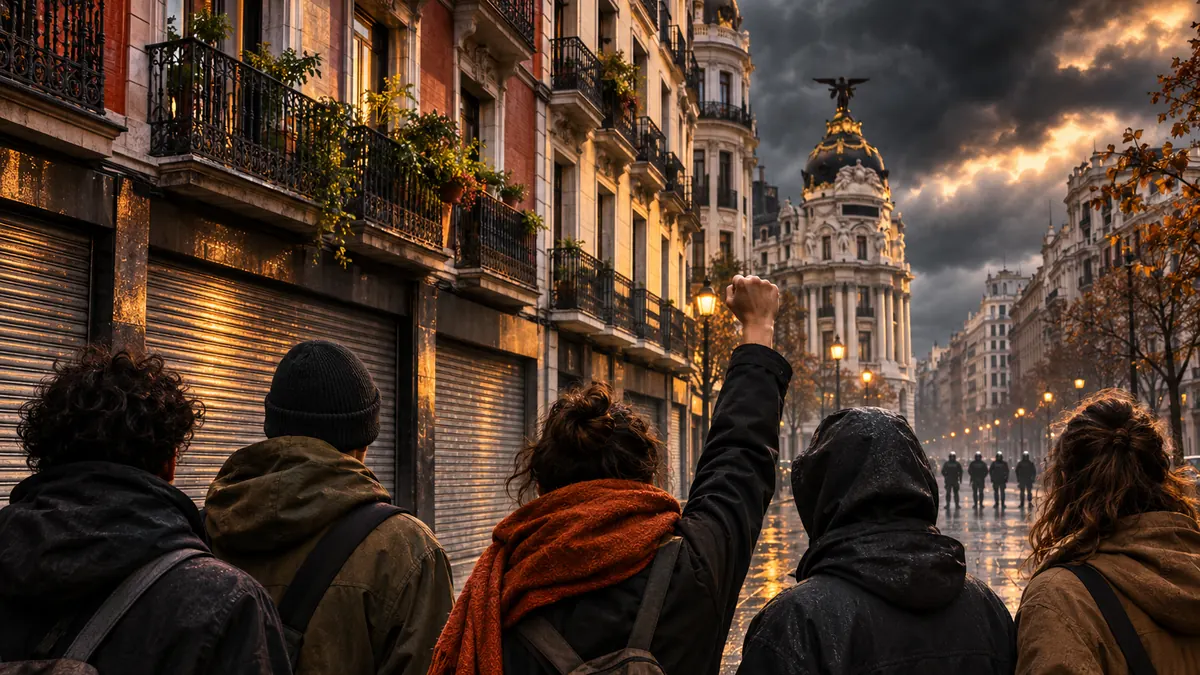
Police used batons and tear gas against demonstrators in Madrid on November 11 as a general strike over Spain’s housing crisis disrupted services and production, G1 reported. Protesters blocked Gran Via, a major shopping street, and forced businesses to close. Primark, H&M and Pull & Bear shut their doors amid a heavy riot police presence.
Anger over the eviction and death of an 87-year-old woman brought housing activists and trade unions together, according to the report. Their demands included affordable housing and rent controls, while demonstrators also carried signs about living costs and wages. G1 described the action as Spain’s first general strike in 14 years. In Madrid, it overlapped with a teachers’ strike that had already lasted almost a month over working conditions.
UGT and CCOO, the two main unions calling the stoppage, reported participation of 90% in the automotive and port sectors, 85% in meat production, 82% in waste collection and 75% in energy. Those figures represent the organisers’ assessment; the supplied report offered no competing estimates. It also described public transport in Barcelona as either halted or subject to lengthy delays during the morning rush.
The disruption extended to schools and universities, many of which closed or operated at reduced capacity, while factories slowed production. Some Barcelona shops closed and boarded up their premises against possible vandalism. Madrid’s urban buses were affected by both union action and heavy morning rain, complicating the picture of strike-related disruption. The report did not establish when normal services would resume or whether the housing demands would produce policy changes.