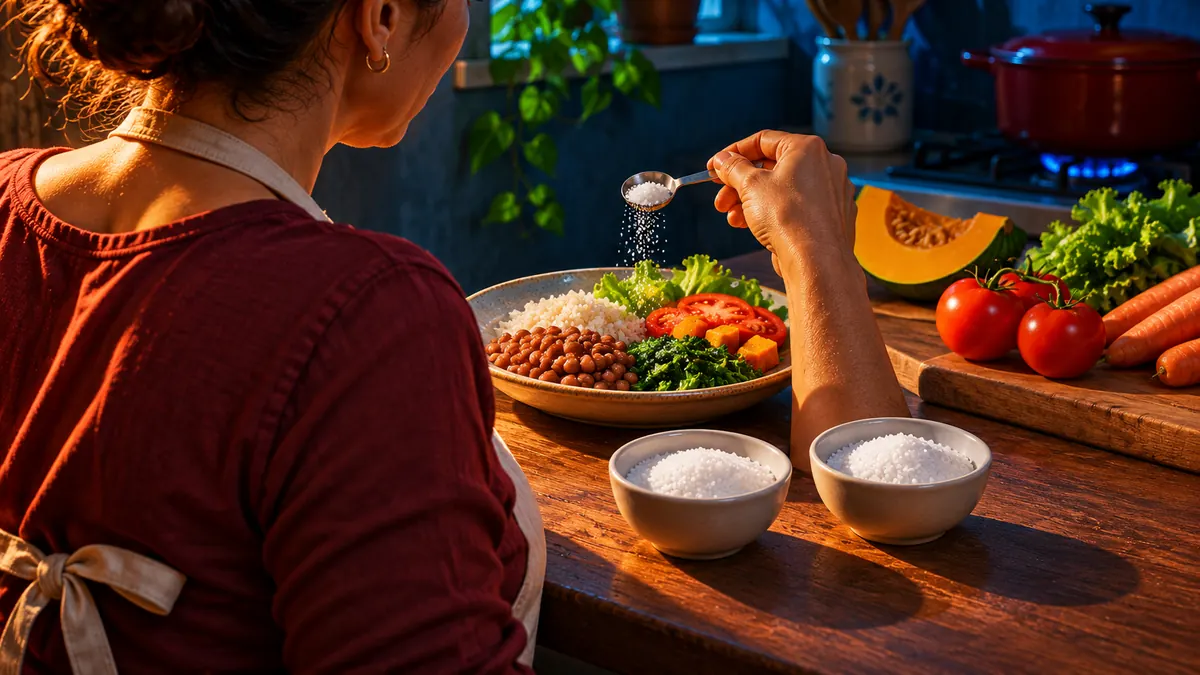
Replacing ordinary salt with a mixture containing less sodium and more potassium could prevent nearly 3 million deaths worldwide each year, according to a modelling study reported by G1. Published in Nature Health, the research estimates that widespread substitution could also avert more than 10 million new cases of cardiovascular and kidney disease annually. These are projected benefits under assumed adoption scenarios, rather than outcomes observed in a global rollout.
Researchers from Australia's George Institute for Global Health and collaborating institutions combined salt consumption, blood pressure and disease data from 193 countries with findings from earlier studies. They modelled a mixture of 75% sodium chloride and 25% potassium chloride replacing salt in homes, food manufacturing and restaurants. The formulation was used in a Chinese trial published in 2021 involving nearly 21,000 people, which recorded fewer strokes, major cardiovascular events and deaths among participants assigned the substitute.
The projected benefit varies with assumptions about potassium's effect on blood pressure, particularly among people without hypertension. More conservative scenarios estimated 2 million to 2.7 million deaths prevented annually. Replacing household salt alone accounted for an estimated 1.85 million deaths prevented, approximately 63% of the broadest benefit. Cardiologist Elzo Mattar told G1 that reducing overall salt consumption remains necessary even when using an enriched product.
Safety and access remain practical constraints. Excess potassium can be dangerous for people with moderate or advanced kidney disease and those taking certain medicines or supplements; specialists interviewed by G1 recommended medical assessment before switching in these circumstances. The researchers also cautioned that worldwide adoption could take decades. The substitute costs about twice as much as ordinary salt on average, while availability and participation by food manufacturers will influence whether the projected benefits materialise.