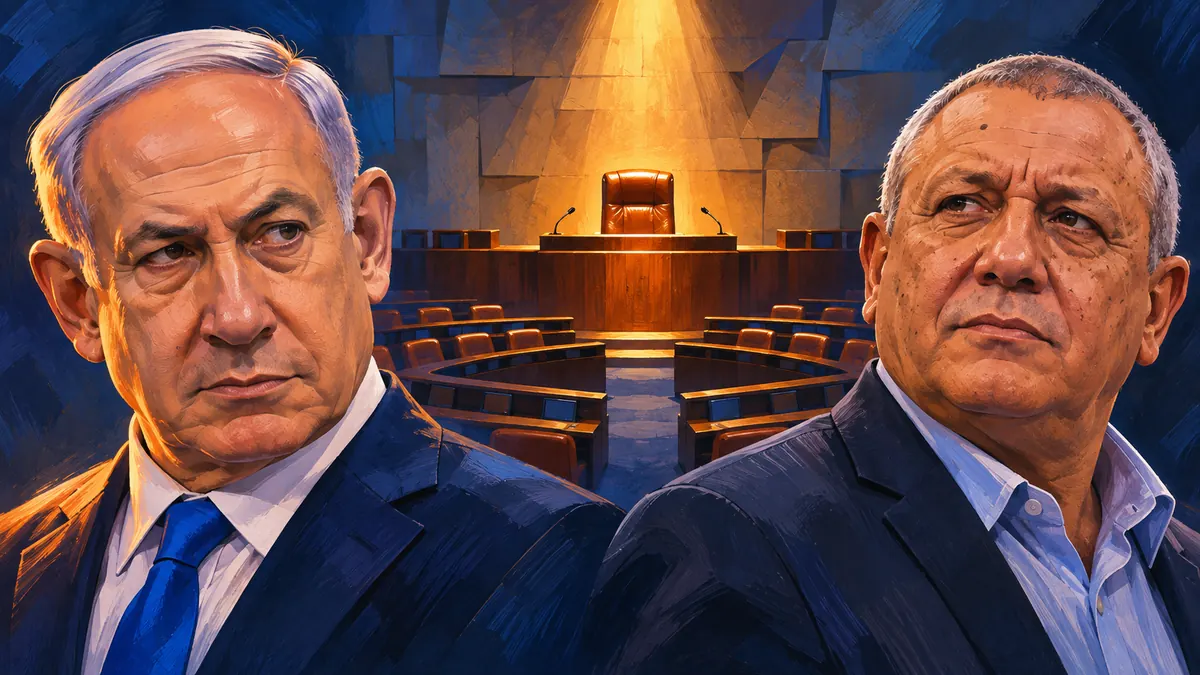
Benjamin Netanyahu renewed his appeal for a unity government with Gadi Eisenkot on November 14, drawing a swift rejection from the rival now negotiating to replace him. Al Jazeera English reported that Israel’s caretaker prime minister invoked security threats, particularly Iran, in a video statement following their Thursday meeting. Eisenkot dismissed the intervention as political manoeuvring, saying negotiations were already underway.
The dispute follows the October 27 election, which gave neither rival’s bloc a majority. Netanyahu’s right-wing and religious allies secured 53 of the Knesset’s 120 seats, Eisenkot’s four-party bloc took 48, and Arab-led parties won 19. President Isaac Herzog subsequently gave Eisenkot the government-forming mandate after 67 lawmakers endorsed him. Those endorsements do not amount to an agreed coalition: Eisenkot has ruled out bringing Arab-led parties into his government.
France 24’s account describes the same exchange and proposed minority-government arithmetic as Al Jazeera, rather than establishing a separate breakthrough. It adds that Eisenkot urged Likud and its allies to support opposition speaker candidate Matan Kahana as evidence of sincere cooperation. Eisenkot has left open participation by Likud members and Bezalel Smotrich’s Religious Zionism, while demanding a break with extremists, notably supporters of Itamar Ben-Gvir.
The speaker election on Tuesday will therefore put a specific cooperation request before lawmakers; Netanyahu ally Amir Ohana currently holds the post. Eisenkot’s proposed minority administration depends on 48 votes in favour, 46 against and possible abstentions by the remaining 26 Arab and ultra-Orthodox lawmakers. Whether those abstentions will materialise remains unresolved. His mandate allows 28 days to assemble a government, with a possible 14-day extension.