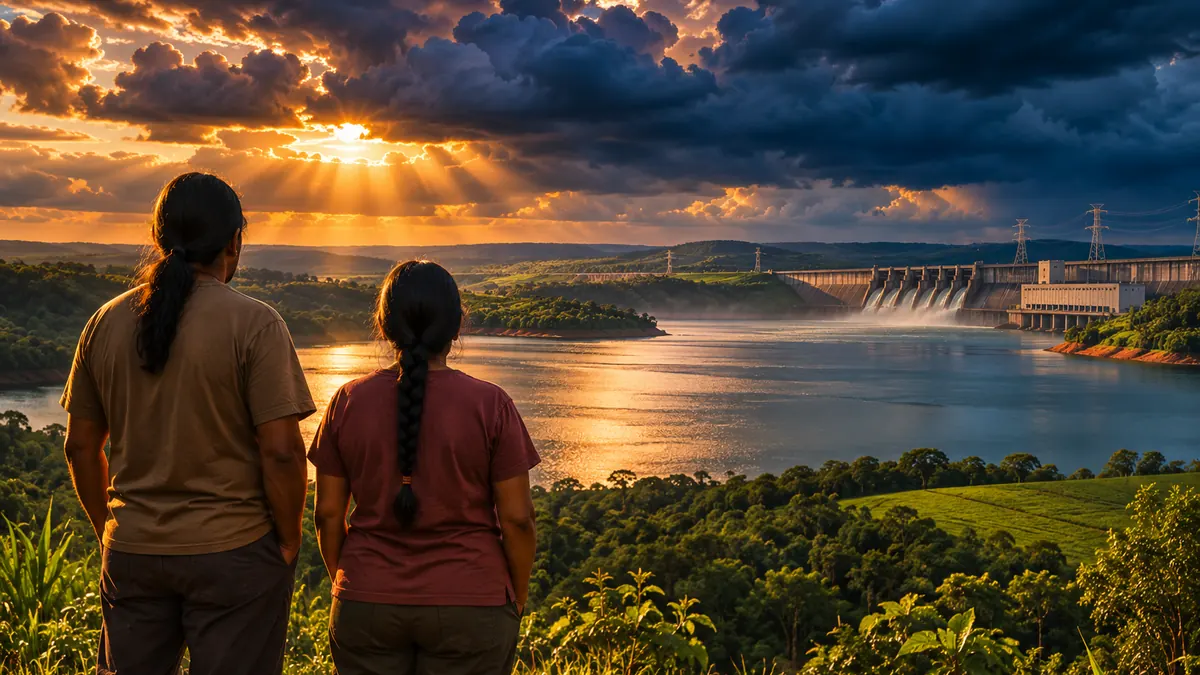
Itaipu Binacional has doubled its budget for buying land for Avá-Guarani Indigenous communities in western Paraná to R$480 million, G1 reported on November 17. The company approved an additional R$240 million for the purchases, which form part of a judicial settlement addressing harms caused by construction of the Itaipu hydroelectric dam. According to Itaipu, purchases have reached 2,219.62 hectares, leaving approximately 780 hectares to meet the agreement’s 3,000-hectare target.
Brazil’s Supreme Federal Court approved the settlement in March 2025 after years of litigation involving Indigenous communities, farmers and public authorities. Itaipu committed to financing land purchases for 31 Avá-Guarani communities across five municipalities. The agreement seeks to repair rights violations and the loss of traditionally occupied territory during dam construction and reservoir creation in the 1970s and 1980s. Itaipu and the Brazilian state publicly apologised in October 2025.
The increased allocation expands the funding available without changing the reported land target. Itaipu said R$303.69 million had already been spent on acquisitions, covering about 74% of the promised area. More than 20 communities now have land regularised through the purchases, according to the company. Itaipu, the Federal Regional Court of the Fourth Region and Indigenous representatives are discussing which improvements should take priority on the acquired land.
Two further agreements are being prepared: R$70 million for Indigenous health facilities in Santa Helena and Guaíra, and R$1.5 million for housing kits for particularly vulnerable families. Itaipu also reported municipal partnerships to drill wells and water deliveries where supplies remain unavailable, supported by the Special Secretariat for Indigenous Health. The report gives no completion date for the remaining land purchases or the proposed health and housing measures.