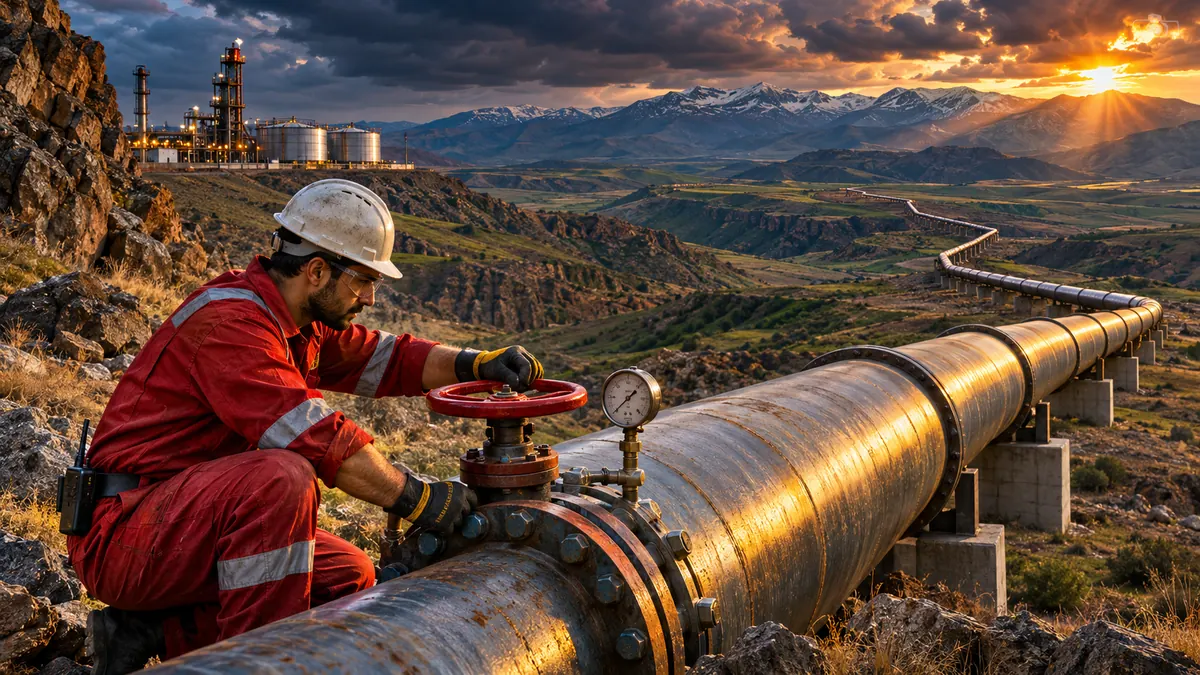
Iraq has resumed pumping oil through the Kirkuk-Ceyhan pipeline for the first time in 12 years, opening an alternative export route as the war involving Iran disrupts maritime traffic through the Strait of Hormuz, Euronews reported. The Oil Ministry said flows restarted on Tuesday after technical and operational tests.
Oil Minister Basim Mohammed Khudair said the initial flow was set at 120,000 barrels per day, with a gradual increase planned to 500,000 barrels per day. He did not give a timetable. The line connects northern Iraqi oil fields with the Turkish Mediterranean port of Ceyhan and was taken out of service in 2014 after repeated attacks by the Islamic State group.
Iraq’s cabinet also approved a recommendation to rehabilitate the pipeline at a meeting in Najaf chaired by Prime Minister Ali al-Zeydi. No details were provided about the scope of the work. In August, Iraq and Turkey agreed on a one-year arrangement to maintain shipments while they negotiate a longer-term deal, based on the line’s capacity of up to 750,000 barrels per day.
The route gives Iraq an option beyond its southern terminals, whose shipments pass through Hormuz. Its effect on total exports remains uncertain: Reuters reported that this would depend on available oil supplies and on whether pipeline shipments add to existing exports. A July discussion between al-Zeydi and Turkish President Recep Tayyip Erdoğan also addressed broader energy cooperation, including a possible agreement.