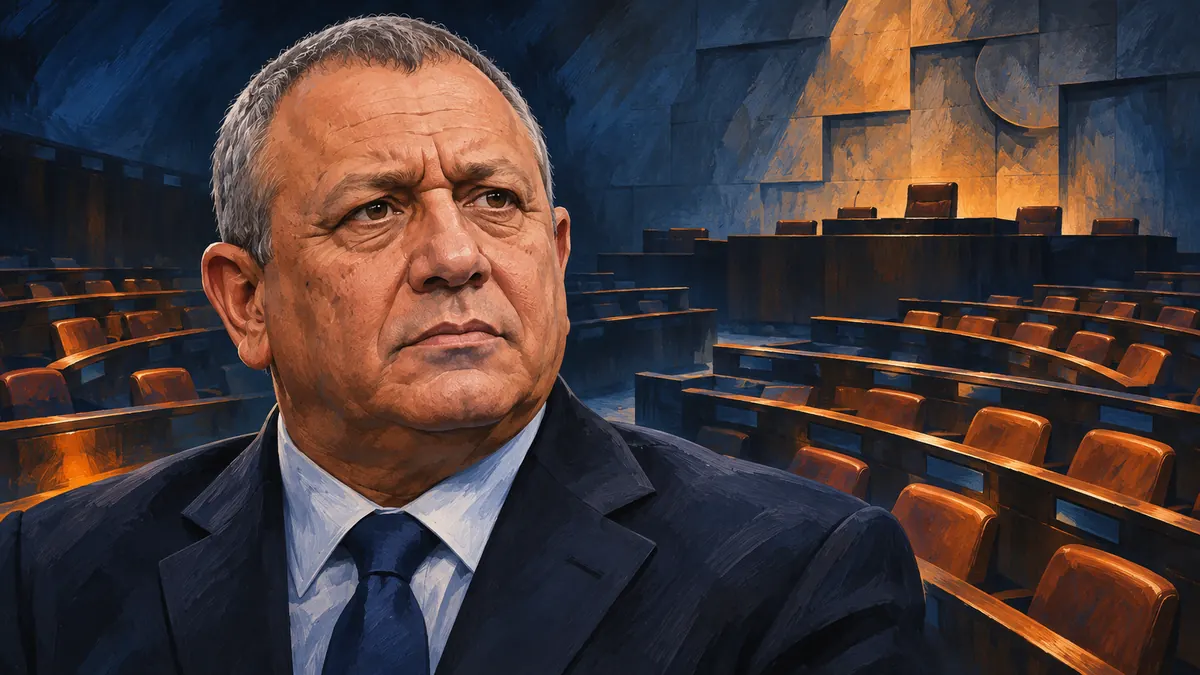
Israeli President Isaac Herzog has selected Yashar leader Gadi Eisenkot to attempt to form a government after last month’s inconclusive election, the Guardian reported on 7 November. Herzog’s office said the president had informed Eisenkot of his intention to give him the task, with a formal appointment scheduled for Sunday, 8 November, at the presidential residence in Jerusalem.
The decision advances the process beyond consultations over whom parties would endorse. Benjamin Netanyahu’s religious-nationalist camp lost its majority in the 27 October election, winning 53 of parliament’s 120 seats. Eisenkot’s opposition bloc secured 48. Both Arab-majority lists endorsed Eisenkot during Herzog’s consultations, but their backing has not resolved whether his bloc would accept their support to govern.
France 24 also reported Herzog’s selection and the planned Sunday appointment. Its account adds that Eisenkot will have 28 days to assemble a government, with a possible 14-day extension. It puts the two Arab parties’ combined strength at 19 seats, enough to take Eisenkot’s bloc beyond the 61 needed for a majority. The reports describe the same presidential decision; their overlapping accounts do not establish that coalition terms have been agreed.
If Eisenkot succeeds, he would replace Netanyahu as prime minister. For now, the nomination gives him an opportunity to negotiate rather than a governing majority. France 24 describes possible routes including a minority administration supported externally by Arab parties, an agreement with ultra-Orthodox parties or a unity coalition with Netanyahu. None is settled, and Eisenkot’s bloc has so far refused to join forces with Arab parties.