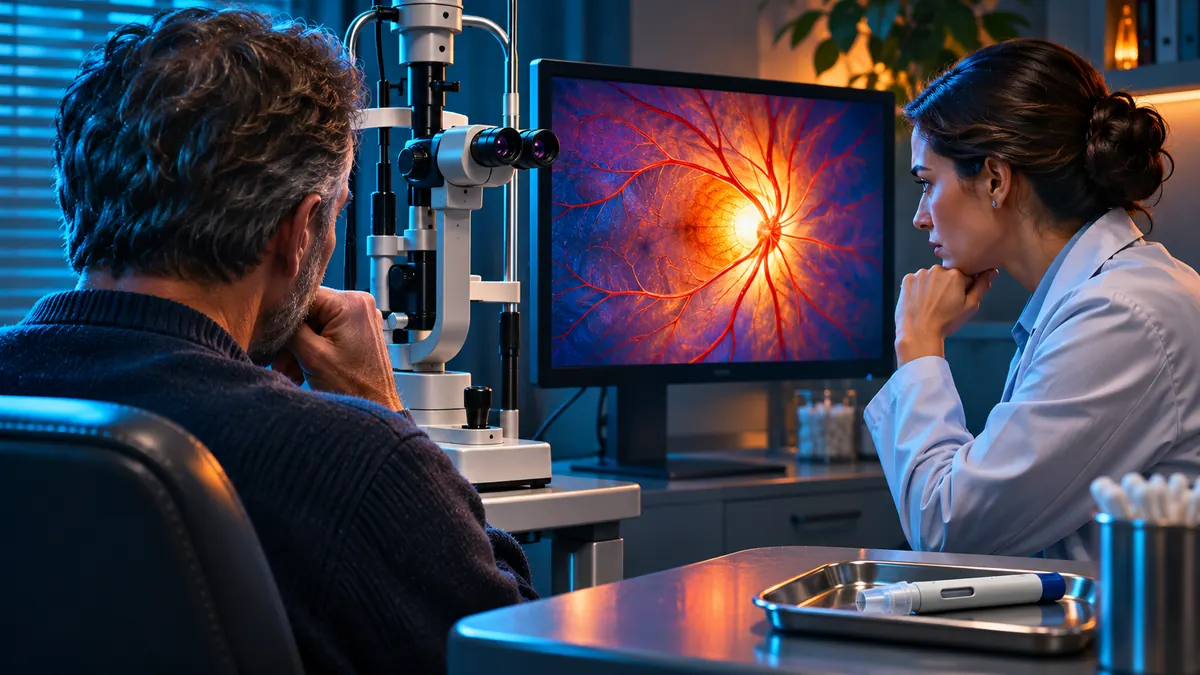
The US Food and Drug Administration has ordered manufacturers of Ozempic, Wegovy, Mounjaro and Zepbound to add warnings about a rare eye disorder that can cause sudden, permanent vision loss, BBC News reported on 10 November 2026. The regulator said its review of patient reports and research found an increased risk of nonarteritic anterior ischemic optic neuropathy, known as NAION, among people taking GLP-1 medicines.
NAION occurs when the optic nerve is deprived of an adequate blood supply and can cause painless loss of vision in one eye. According to the American Academy of Ophthalmology, there is no known treatment that reverses the resulting damage. The new warning adds to existing labels covering conditions including pancreatitis and gallbladder disease. The FDA said assessing the evidence was complicated because patients with obesity or type 2 diabetes may already have separate risk factors for NAION.
The FDA’s assessment does not settle whether the medicines cause the disorder. In statements reported by the BBC, the ophthalmology academy said any additional risk appeared small and causation had not been established. Wegovy manufacturer Novo Nordisk also said the data did not demonstrate cause and effect. The BBC cited an earlier European Medicines Agency safety assessment estimating that NAION could affect up to one in 10,000 semaglutide users; that estimate concerns semaglutide specifically.
For patients, the warning highlights a potentially irreversible complication alongside the medicines’ benefits for diabetes, obesity and heart disease. The ophthalmology academy advised patients to discuss treatment with their doctor before stopping medication and to seek prompt specialist attention for sudden, painless vision loss in one eye. The FDA said why GLP-1 users might face greater risk remained unknown.