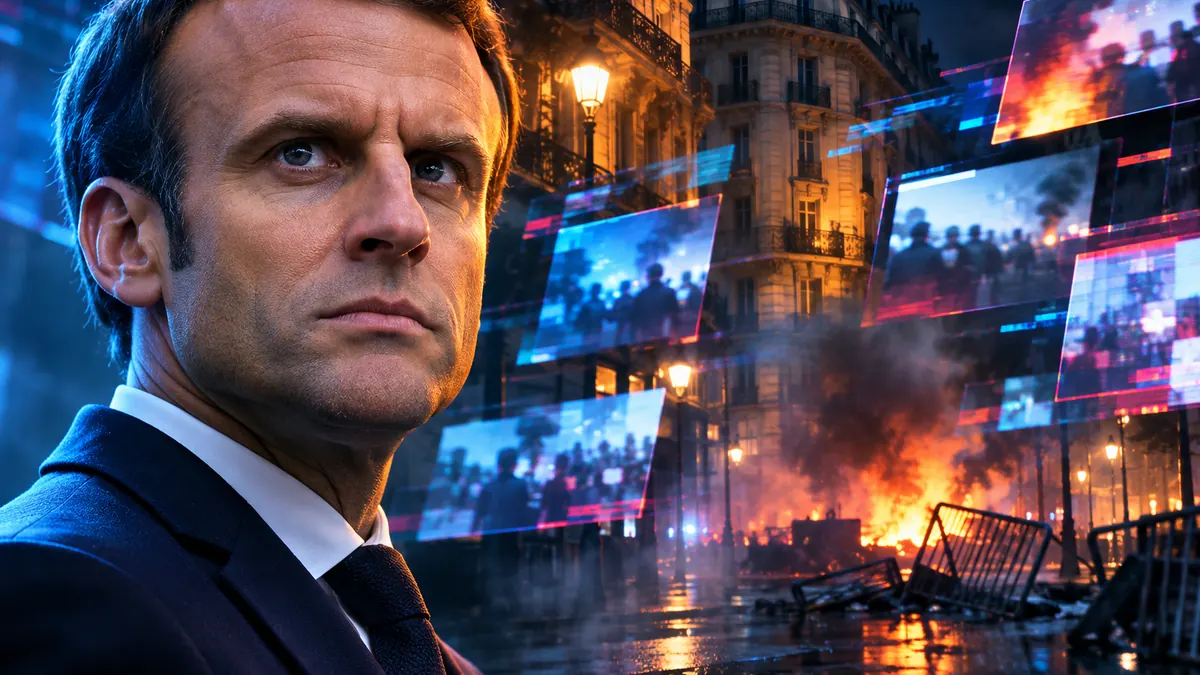
A covert Russian network circulated fabricated news videos to exploit France’s October unrest, according to an internal EU assessment reviewed by Reuters and reported by France 24. The document identified Operation Overload as targeting French audiences with material impersonating Western media, including false allegations of migrant attacks on protesters and warnings of imminent terrorism.
The assessment covered October 7–21, when demonstrations over rising living costs and declining public services developed into riots in French cities. It described an effort to portray the country’s leadership as weak and increasingly authoritarian, while finding no evidence that Moscow or other outside actors instigated or escalated the protests. The report also said the operation sought to weaken European support for Ukraine by suggesting governments were putting Ukraine ahead of domestic needs.
A separate French foreign ministry assessment, also reviewed by Reuters, examined accounts associated with Russia, Israel and the US MAGA movement. For October 16–18, it counted 2.8 million views for the 10 most-viewed X posts from pro-Russian circles, compared with more than 49 million for MAGA-linked accounts and more than 35 million for Israeli officials, government accounts, media and influencers. Those figures describe selected posts’ reach; they do not establish coordination among the groups or independently corroborate the EU’s attribution.
The documents put the focus on efforts to influence interpretations of the unrest rather than its origins. French officials referred Reuters to Emmanuel Macron’s October 21 remarks distinguishing foreign information manipulation from visible interference behind the protests. Reuters could not independently verify either assessment’s assertions. Russia’s foreign ministry and the Israeli prime minister’s office and foreign ministry did not respond to requests for comment; the reporting does not establish how far the online activity changed public opinion.