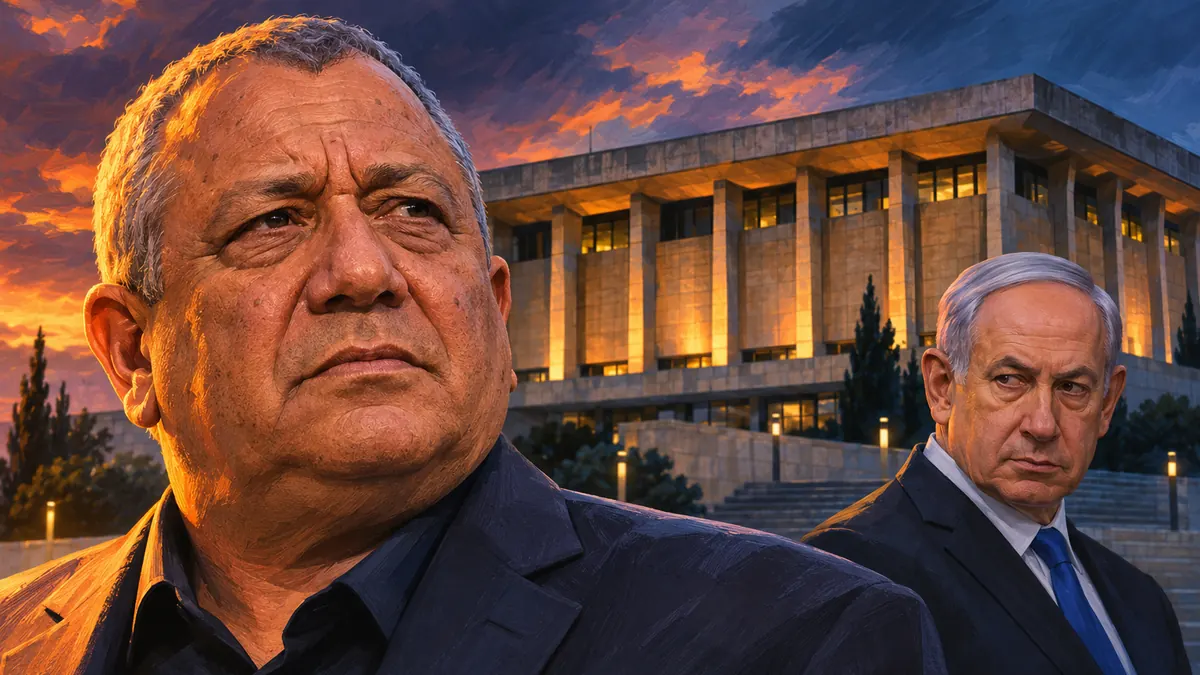
Gadi Eisenkot secured recommendations from 67 members of Israel’s 120-seat parliament to attempt to form the next government, according to a subsequent South China Morning Post report. President Isaac Herzog said he would announce his choice on Sunday, November 8. Benjamin Netanyahu received 46 recommendations, while seven lawmakers abstained, leaving the opposition challenger ahead in consultations without a governing coalition yet agreed.
The tally followed the Joint List’s November 5 announcement that its 11 lawmakers would recommend Eisenkot, reported by France 24. Arab-majority lists together won a record 19 seats in the October 27 election. Netanyahu’s bloc, counting United Torah Judaism, held 53 seats against 48 for Eisenkot’s bloc. United Torah Judaism, which won seven seats and had supported Netanyahu after five previous elections, declined to recommend either contender.
The later South China Morning Post account advances France 24’s earlier report from announced party positions to a completed recommendation tally and a scheduled presidential decision. Its figures put Eisenkot’s recommendations at the combined strength of his bloc and the Arab-majority lists, while Netanyahu’s total excludes United Torah Judaism. These recommendations concern who should receive the opportunity to negotiate; cooperation between Eisenkot’s opposition allies and Arab parties remains unresolved.
France 24 identified possible resistance from opposition ally Avigdor Liberman to reliance on Arab parties. Military service is another dividing issue: United Torah Judaism wants to preserve religious students’ exemptions, while Eisenkot supports ending them. Herzog retains the choice of whom to nominate. Whoever receives the mandate will have 28 days to assemble a government, potentially extended by 14 days; failure would lead Herzog to task another lawmaker.