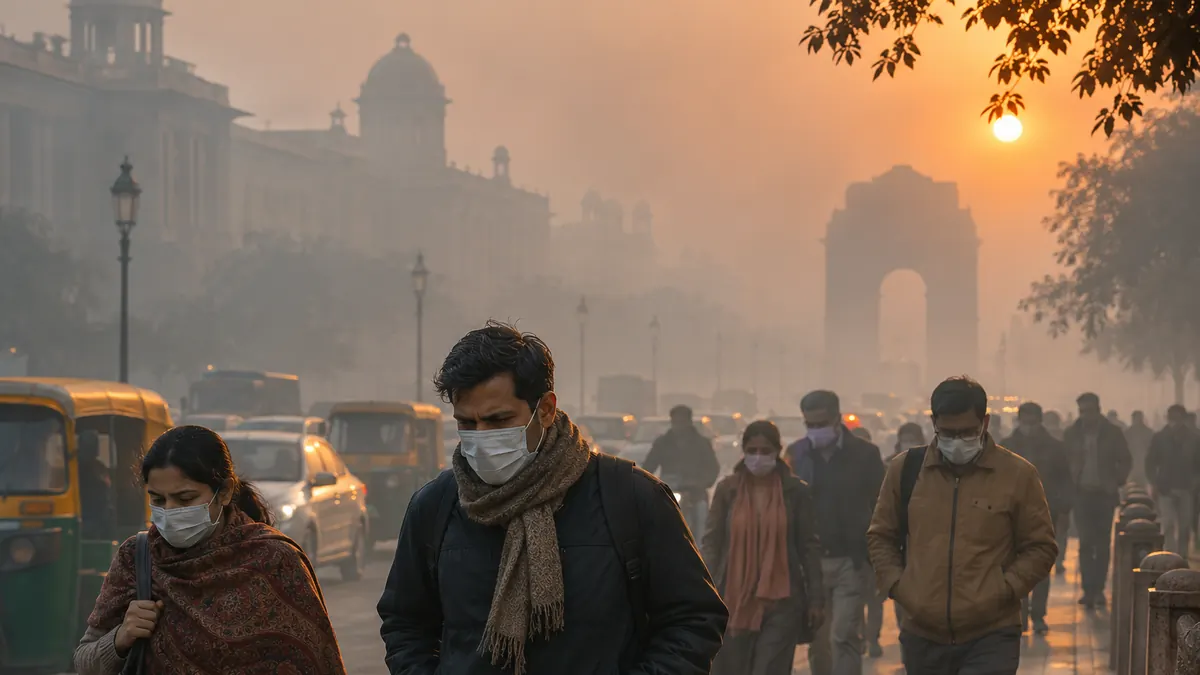
Heavy smog covered New Delhi on Monday, November 9, after Diwali fireworks added smoke and fine particles to the capital’s already polluted air, Al Jazeera English reported. Air Quality Index readings exceeded 350 in several areas that morning. The deterioration heightened health concerns in a city of roughly 30 million people, where winter weather can keep pollution trapped close to the ground.
Residents set off firecrackers throughout Sunday evening despite restrictions imposed by India’s Supreme Court last month. The court allowed only approved green firecrackers under specified conditions during three-hour windows on Saturday and Sunday. Those products emit less pollution than conventional fireworks, according to the report, but still release pollutants. The restrictions therefore limited the permitted products and hours without eliminating emissions from the celebrations.
The pollution episode had already become acute before the festival. Al Jazeera reported that air-monitor readings on Wednesday showed pollution exceeding the World Health Organization’s recommended daily limit by more than 30 times. Its account also cited environment ministry estimates attributing 23 percent of Delhi’s winter pollution to vehicles and 20 percent to biomass burning, including agricultural stubble fires. Those figures describe broader seasonal sources rather than the specific contribution of Sunday’s fireworks.
Cooler temperatures, weak winds and stagnant air can prevent those emissions from dispersing, leaving haze over Delhi and surrounding areas for days. The report provides no forecast for when conditions will improve or estimate of how much the fireworks increased pollution. It also does not establish how widely the court’s restrictions were enforced.