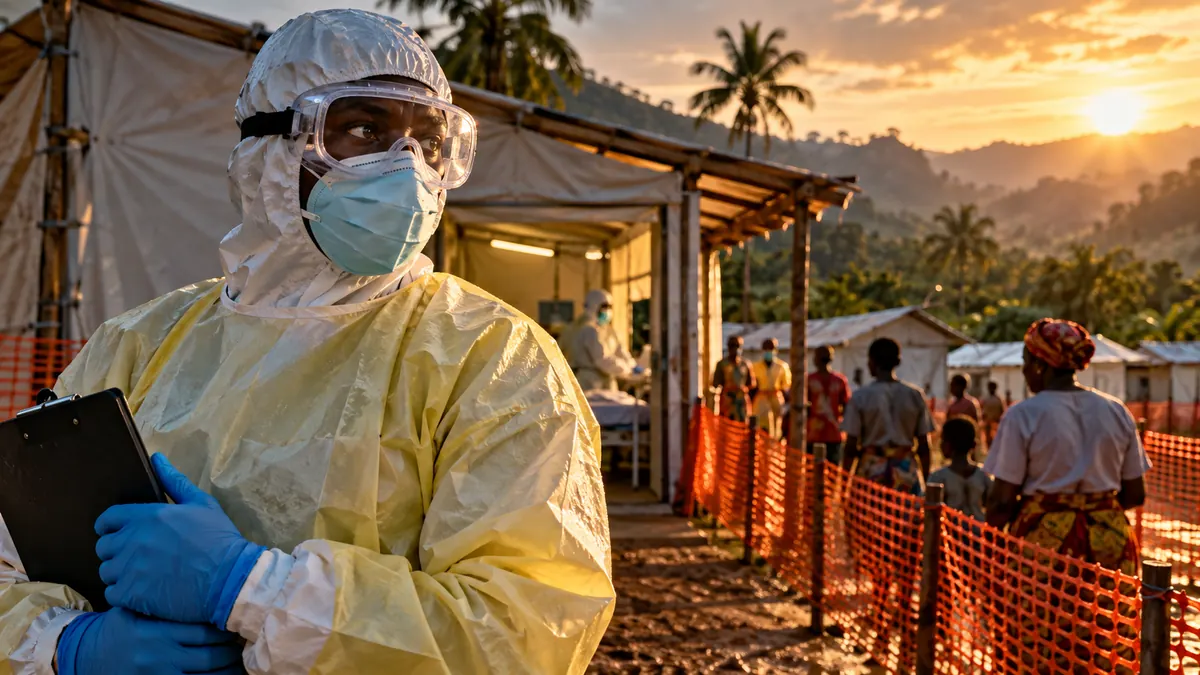
More than 5,000 people have died in the Democratic Republic of Congo’s ongoing Ebola outbreak, according to government figures reported by BBC News on 31 October 2026. More than 10,300 confirmed cases have been recorded across eight of the country’s 26 provinces. The reported case fatality rate is 48.6%.
The health ministry identifies north-eastern Ituri province as the epicentre. Conflict there makes containment harder, while violence against responders adds another obstacle. According to UN-backed Radio Okapi, a nurse was killed and another health worker seriously injured earlier this week after local youths accused them of spreading infection and contaminating water.
The outbreak began in May and became the country’s deadliest in August, public health officials said. Its reported death toll now exceeds the 2,299 deaths recorded during the 2018–2020 outbreak. The World Health Organization’s Africa office has called for expanded control measures, better access to affected communities and greater outreach.
The Bundibugyo virus species is responsible, with no vaccine or treatment yet available specifically for this strain, the BBC report says; vaccine trials are under way. Ebola spreads through contact with infected bodily fluids. Cases have also been confirmed in Kenya, Uganda and Nigeria, although Nigeria’s two additional suspected cases reported on Saturday remained under investigation.