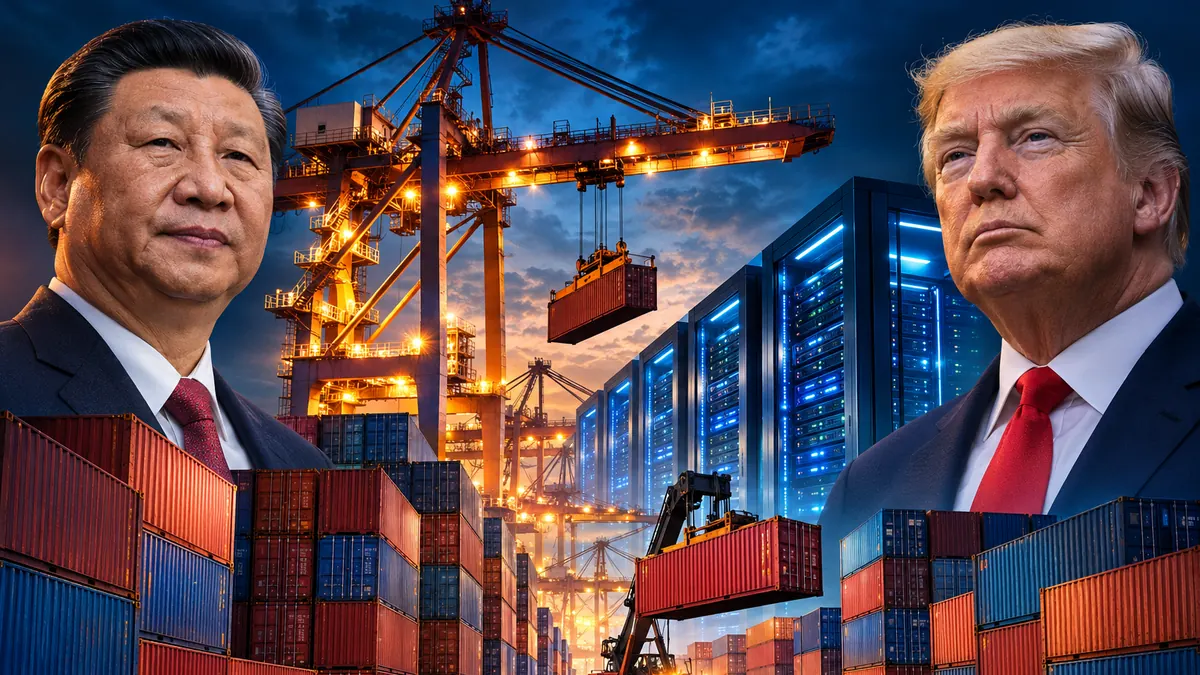
China’s trade surplus reached $1.04 trillion in the first ten months of 2026 as exports benefited from global spending on artificial intelligence infrastructure, G1 reported. Customs figures released on November 10 showed October exports rising 35.2% from a year earlier in dollar terms, exceeding economists’ forecast of 33.5%. The accumulated surplus crossed $1 trillion for the second consecutive year, reaching that threshold a month earlier than in 2025.
The export gains come as weak consumption and a prolonged property downturn constrain demand inside China. October’s export growth was slightly below September’s 36.3%, but imports accelerated to 41.6%, against a Reuters survey forecast of 32% and September’s 31%. Separate industry figures cited in the report showed domestic vehicle sales falling for a twelfth consecutive month while car exports continued to grow strongly.
The latest figures also showed China’s monthly surplus with the United States narrowing to $32.71 billion from $34.01 billion in September. That decline accompanied a much larger accumulated surplus across China’s trading relationships. Beijing announced a two-month extension of its US trade truce on November 9, ahead of an expected meeting between Xi Jinping and Donald Trump at the following week’s Asia-Pacific Economic Cooperation summit in Shenzhen.
The expanding surplus could intensify trade friction with the European Union, where leaders have advocated further restrictions on Chinese goods. An agreed limit on Chinese hybrid vehicle exports has yet to take effect, potentially encouraging earlier shipments. Macquarie analysts cited by G1 expect Chinese exports to accelerate in the fourth quarter before slowing from the first quarter of 2027. How long the AI investment surge sustains overseas demand remains a central uncertainty for an economy increasingly dependent on exports.