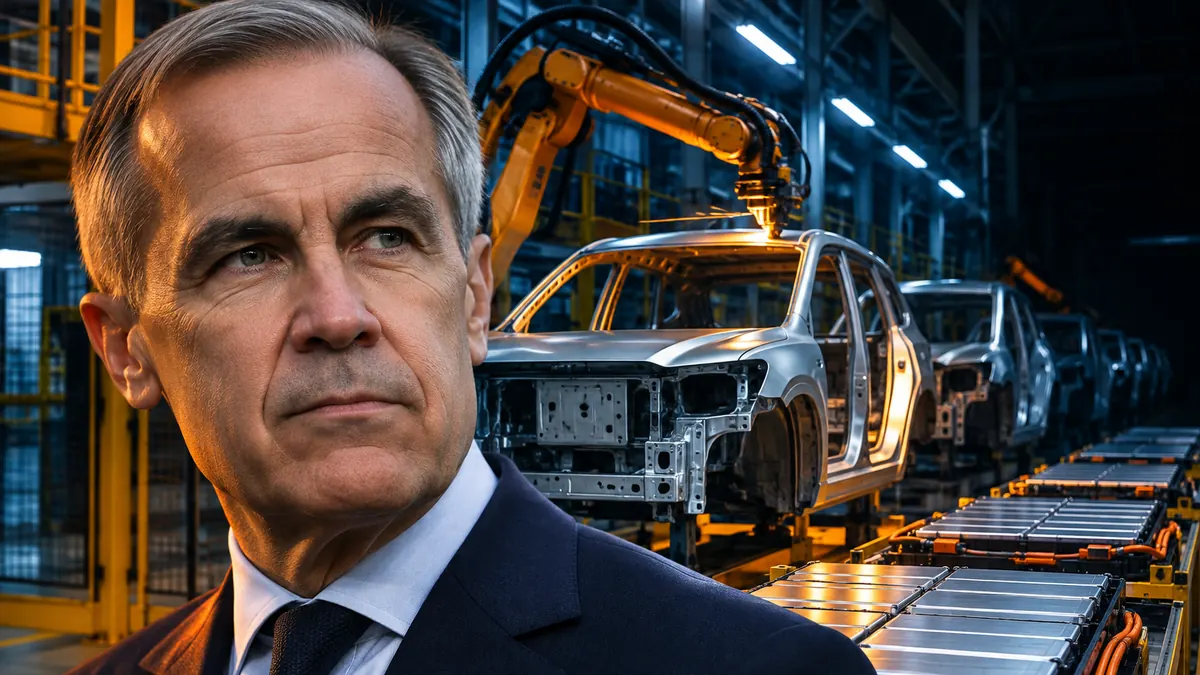
Canada could pursue investment from Chinese automakers if negotiations with Washington fail to preserve an integrated North American auto industry, Prime Minister Mark Carney said in Cambodia on 16 November. According to an Associated Press report published by the Guardian, Carney said US talks remained his priority, while identifying European, Chinese and Japanese manufacturers as possible alternatives. He is due to meet Chinese leader Xi Jinping in Shenzhen this week, with auto manufacturing expected on the agenda.
The comments outline a possible next step after a January agreement lowered Canada’s tariff on Chinese electric vehicles from 100% to 6.1% for an initial annual allowance of up to 49,000 vehicles. That cap is scheduled to rise over time. China agreed in return to reduce tariffs on Canadian agricultural products, including canola. Carney had said the arrangement could attract investment and create Canadian auto jobs.
Carney rejected the suggestion that potential Chinese investment was bargaining leverage against US President Donald Trump. He said Canada would seek other opportunities if its auto workers were not fully employed within North American production networks. Any Chinese investment, he added, would require substantial Canadian manufacturing, proper labour standards and growing domestic supply chains, including Canadian critical minerals for electric vehicles, rather than simply assembling imported components.
The stakes include factories operated across Canada, the US and Mexico by Ford, General Motors and Stellantis, whose parts can cross borders repeatedly during production. Canada has threatened legal action against Stellantis over its decision to move planned Jeep Compass production from Ontario to Illinois. Carney reported progress in US trade talks on 14 November, but differences remain. His latest remarks set conditions for alternative investment without announcing a manufacturing deal.