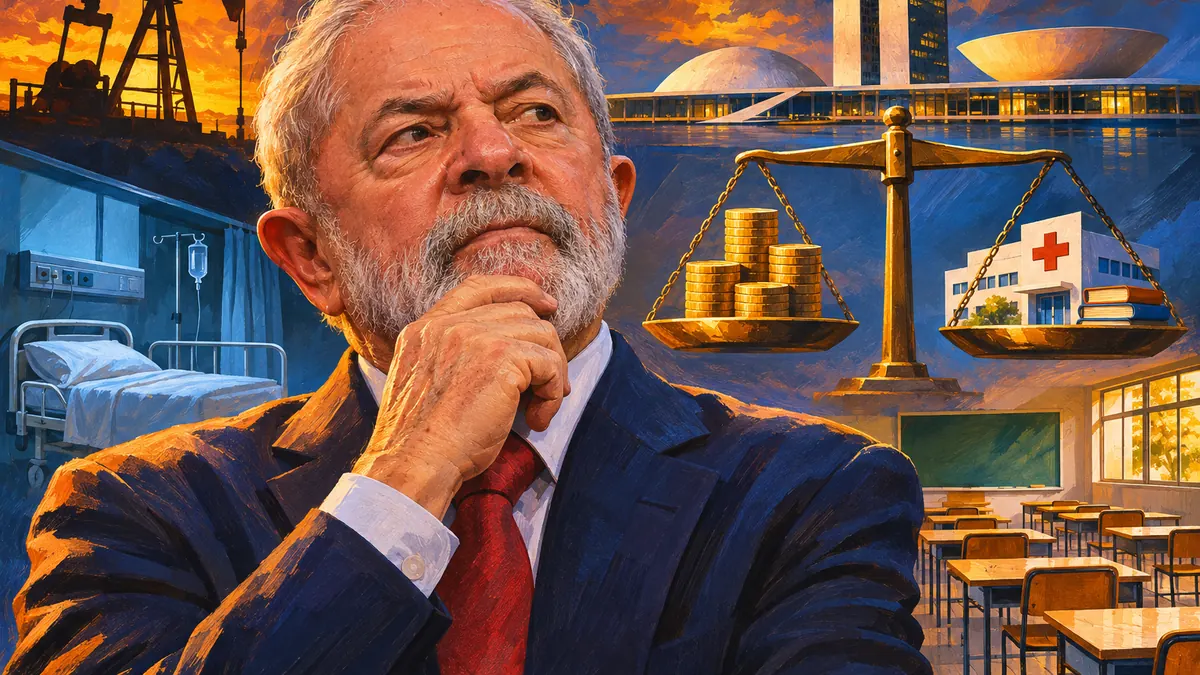
President Luiz Inácio Lula da Silva’s government is working with Brazil’s Senate on a fiscal adjustment package that could reach R$80 billion in 2027, G1 reported on November 11. Officials aim to introduce a complementary bill this week. One measure under discussion would exclude extraordinary oil and gas revenue from calculations governing minimum health and education spending and the Federal District’s constitutional fund.
The proposal would extend a restriction established by legislation Congress approved in August. That legislation allowed extra oil-sale proceeds to finance fuel tax reductions and excluded those resources from the revenue base used for the health spending floor when public accounts were in deficit. The new text would apply the exclusion in both deficit and surplus situations and broaden its reach to education and the Federal District fund.
According to G1’s account of reporting by Ana Flor and Valdo Cruz, the discussions follow earlier signals that the economic team would focus on a clearer commitment to the fiscal target, reviewing tax benefits and strengthening limits on expenditure growth. In a televised address on November 8, Lula expressed concern about public debt and interest rates and reaffirmed his commitment to fiscal responsibility, without detailing spending controls.
The calculation matters because federal health spending must currently equal at least 15% of net current revenue, while education’s minimum is 18% of net tax revenue. Excluding receipts would lower the mandatory spending amounts relative to calculations that include them; it would not itself establish actual spending. The bill remains under discussion, and the report does not specify how much of the potential R$80 billion adjustment would come from this measure.