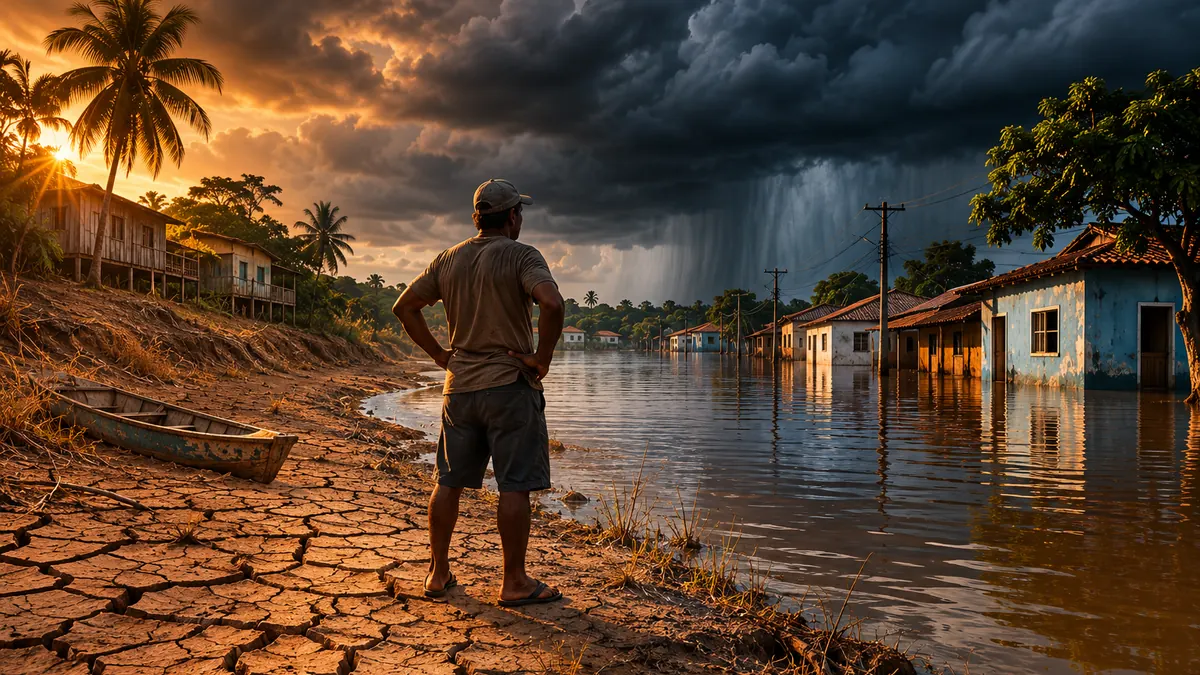
Ninety-three percent of Brazil’s municipalities reported at least one extreme weather event between 2021 and 2024, according to IBGE survey findings reported by G1. Only 385 of the country’s 5,571 municipalities said they had recorded none of the events covered by the MUNIC 2025 survey, which included drought, flooding, flash floods, landslides and wildfires.
The findings show increases in several categories compared with the previous survey, from 2020. The share of municipalities reporting drought rose from 53.4% to 59%, while the proportion reporting river flooding increased from 32.8% to 42.4%. Reports of waterlogging also became more widespread, rising from 35.8% to 49.5%. These figures describe the proportion of municipalities reporting each hazard, rather than the number of individual incidents.
Overlapping hazards were particularly widespread in northern Brazil. Nationwide, 1,414 municipalities, or 25.4%, reported both drought and flooding. In Amazonas, 57 of 62 municipalities—92%—reported both, including Manaus, with 2.3 million residents. Acre followed at 86.4% of its 22 municipalities, ahead of Roraima at 73.3% of its 15 municipalities.
Rio Grande do Sul ranked fourth for this combination, with 70% of its municipalities reporting both hazards. The survey period includes the state’s historic 2024 floods, which killed 184 people and sent more than 80,000 into shelters. Those consequences illustrate the human toll behind the municipal figures. However, the survey relies on information supplied by town halls: an absence of reported events does not establish that a municipality is immune to climate-related impacts.