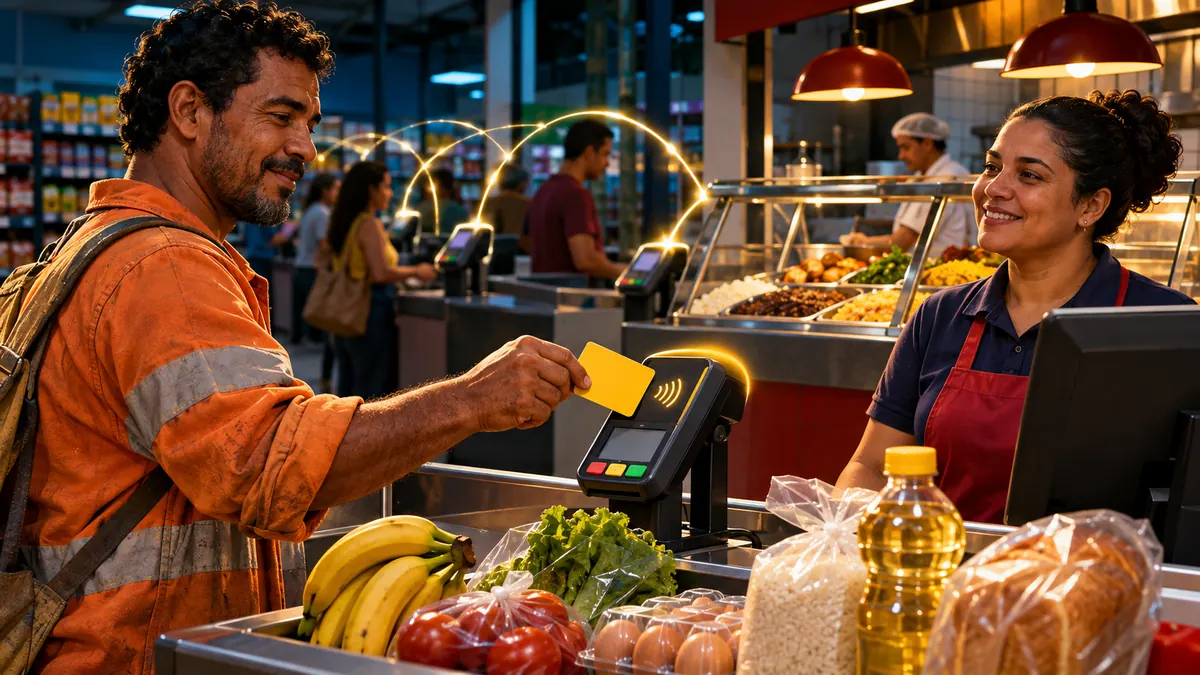
Brazil began implementing rules on November 7, 2026, intended to let workers use meal and grocery benefit cards at more businesses, G1 reported. The nationwide rollout connects payment networks operated by different benefit providers. It aims to reduce refusals caused by a merchant accepting food benefits but lacking an agreement with the company behind a worker’s card.
Under the shared-network system, participating businesses should be able to process cards from multiple providers through the same payment infrastructure. G1, citing the national coordination office of the Worker Food Programme, known as PAT, said the change follows Decree 12.712, published in November 2025. The rules also cap fees charged to merchants at 3.6% and require sales proceeds to reach them within 15 calendar days, addressing costs and payment delays that businesses have criticised.
Wider acceptance does not increase workers’ balances or change eligible purchases, according to the programme information and specialists consulted by G1. Meal benefits remain for prepared meals, while grocery benefits remain for food purchases. Workers cannot withdraw the money, transfer it to another person or move balances between the two benefits. Businesses retain the choice of whether to accept food benefit payments, but surcharges and minimum purchase requirements are considered abusive practices.
The practical reach of the change will depend on implementation: G1 reported that integration failures and isolated payment problems could persist during adaptation. Separately, PAT participants, including registered businesses and nutritionists, must update their registration by November 9, 2026, or face automatic exclusion and the need to reapply. Programme violations can bring administrative penalties, including fines of R$5,000 to R$50,000, with doubling possible for repeat offences or obstruction of inspections.