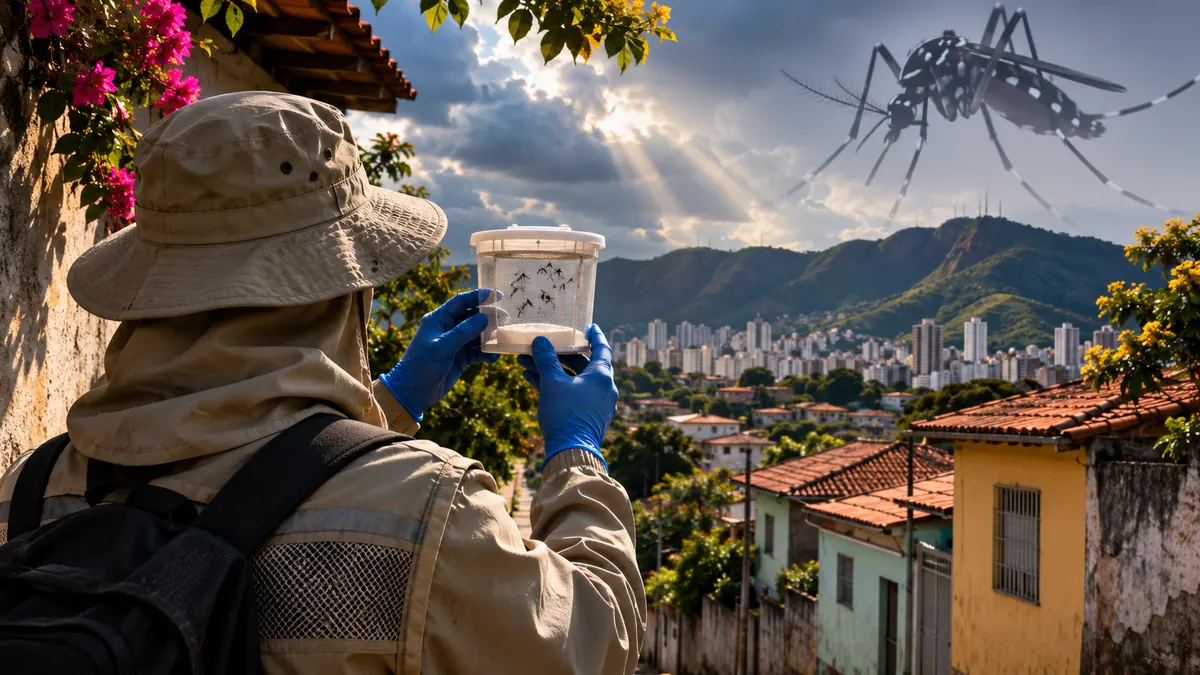
Children in Belo Horizonte neighbourhoods where mosquitoes carrying the Wolbachia bacterium were released had about 69% fewer dengue and chikungunya infections than those in comparable areas, according to a study disclosed on November 21. G1 reported that more than 5,700 children took part.
The four-year study compared neighbourhoods using the same mosquito-control measures, including insecticides. Half the areas were randomly selected to receive releases of Aedes aegypti mosquitoes carrying Wolbachia. The researchers tested blood samples for signs of infection, an approach intended to capture infections that might otherwise go undiagnosed when symptoms are mild.
Wolbachia reduces mosquitoes’ ability to transmit certain viruses and can pass from female mosquitoes to their offspring, allowing the bacterium to spread through a local mosquito population. Sri Edupuganti of Emory University, a member of the international research team, said the effect persisted during Brazil’s severe dengue outbreak in 2024. The findings were presented at a meeting of the American Society of Tropical Medicine and Hygiene.
The results add evidence for a control strategy that can be used alongside existing measures. Researchers also looked for signs of Zika infection, but found too few cases to calculate whether the mosquito releases affected it. The study does not establish an effect on Zika in the children studied.