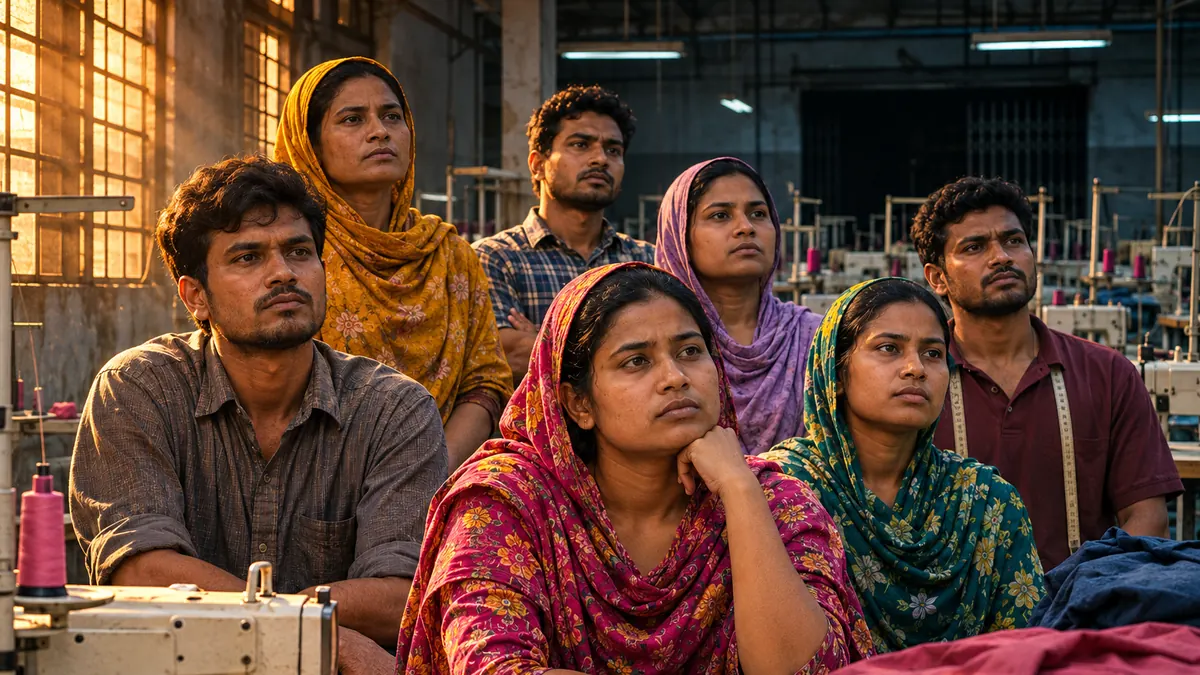
Nearly 150 garment factories in Bangladesh’s production hubs have closed amid strikes demanding a higher minimum wage, BBC News reported on 15 November. The disruption has affected Savar, Ashulia and Gazipur. On Sunday morning, protesters blocked the Dhaka-Tangail highway in Gazipur for about an hour before police intervened, extending the unrest beyond factory premises.
Workers are seeking a monthly minimum wage of 30,000 taka, compared with the current 12,500 taka, which employees say cannot cover living costs. The government established a minimum wage board on 1 November to recommend a revised pay structure. At its first meeting, the board said it aimed to complete its recommendations by the end of November, with revised pay expected to take effect on 1 December.
The BBC also reported that the Bangladesh Garment Manufacturers and Exporters Association and the Bangladesh Knitwear Manufacturers and Exporters Association were demanding protection for factories. The manufacturers questioned continuing wage negotiations without assurances of protection and said factories unable to sustain production would close indefinitely from Monday. Police superintendent Mohammad Amjad Hossain told the broadcaster that 13 factories had closed on Saturday night and another 16 during Sunday morning’s unrest.
The stoppages affect an industry employing about four million people, generating nearly $40 billion in annual exports and accounting for 10% of Bangladesh’s GDP, according to the BBC. Factories supply brands including H&M, Primark and Zara. Prolonged disruption could affect international buyers, while workers face potential lost earnings under labour provisions allowing wages to be withheld during shutdowns. The report establishes neither an agreed wage increase nor a date for factories to reopen.