Smoke pushed particle concentrations far beyond the local monitoring system’s threshold for good air quality in parts of Brazil’s Amazonas state on November 14, G1 reported. A sensor in rural Vila Amazônia, within Parintins municipality, recorded 392.5 micrograms per cubic metre on Saturday morning—about 15.7 times the upper limit of the system’s good category.
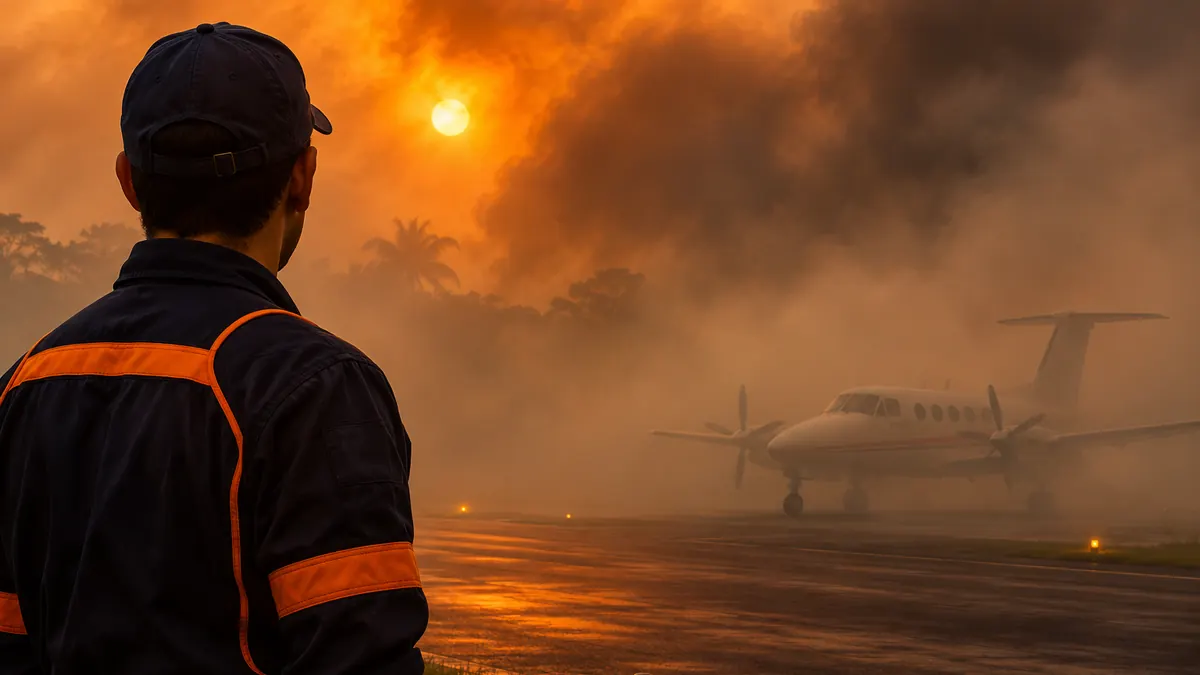
The readings follow disruptions linked to smoke from fires in Parintins on November 9, when municipal and state schools suspended classes. Commercial flights were also cancelled because visibility was poor. Saturday’s measurements show that heavy pollution remained a problem later in the week, although the report does not establish whether the earlier service suspensions were still in force.
G1 cited the Selva environmental monitoring system, which classifies particle concentrations of up to 25 micrograms per cubic metre as good. Parintins recorded 332.3, while Barreirinha registered 306.7 at about 8:20 a.m. Other reported readings included 154.8 in São Sebastião do Uatumã, 161.1 in Itapiranga, 90.8 in Itacoatiara and 109.5 in Silves. These are particle concentrations, rather than unitless air-quality index scores.
The consequences have extended to patient transport: smoke also affected aeromedical operations used to take patients to other municipalities. Parintins airport operates using visual references, requiring pilots to see the runway for safe takeoffs and landings, G1 explained. The supplied report gives no timetable for improved visibility or cleaner air, and does not specify how many patients or flights were affected.