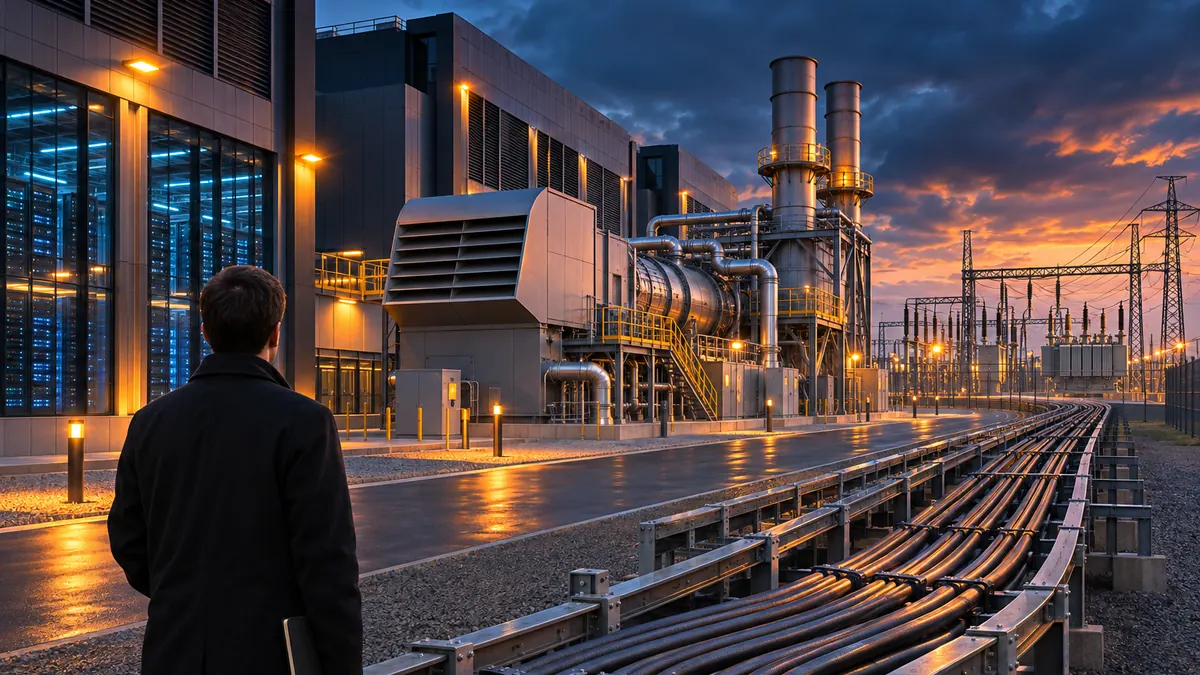
Developers planning datacentres in the United States, Britain and mainland Europe have proposed 181 gigawatts of on-site gas-fired generating capacity to overcome electricity grid connection delays, according to BloombergNEF research reported by The Guardian on November 11. The proposed capacity is almost four times Great Britain’s peak electricity demand, illustrating the scale of the power infrastructure being considered alongside the computing facilities.
The research puts 90% of the proposed on-site gas-fired power stations in the United States. If the planned rollout proceeds, those US plants could produce about 345 million metric tonnes of carbon dioxide equivalent annually. BloombergNEF forecasts that AI datacentres’ electricity demand will almost quadruple by 2035 to 2,354 terawatt-hours, representing 7% of global electricity demand. Servers, cooling equipment and other facility systems all contribute to consumption.
Britain’s gas network industry body, Future Energy Networks, said planned datacentres made more than 100 inquiries about gas connections in 2024–25 because electricity grid access was delayed. The Guardian identified Wapseys Wood in Buckinghamshire and Quest Park in Bedfordshire as projects seeking their own gas-fired power stations. Both are among the first datacentres fast-tracked through the nationally significant infrastructure project regime, which bypasses local planning authorities.
The financial case for keeping those generators running could outlast the connection delays that prompted their construction, BloombergNEF’s Mark Daly warned, even where developers describe them as temporary. The report identifies faster grid connections as a more sustainable route and says emissions will also depend on cleaner generation being added alongside demand. The proposals are not completed plants: their eventual construction, operating lifetimes and resulting emissions remain uncertain.